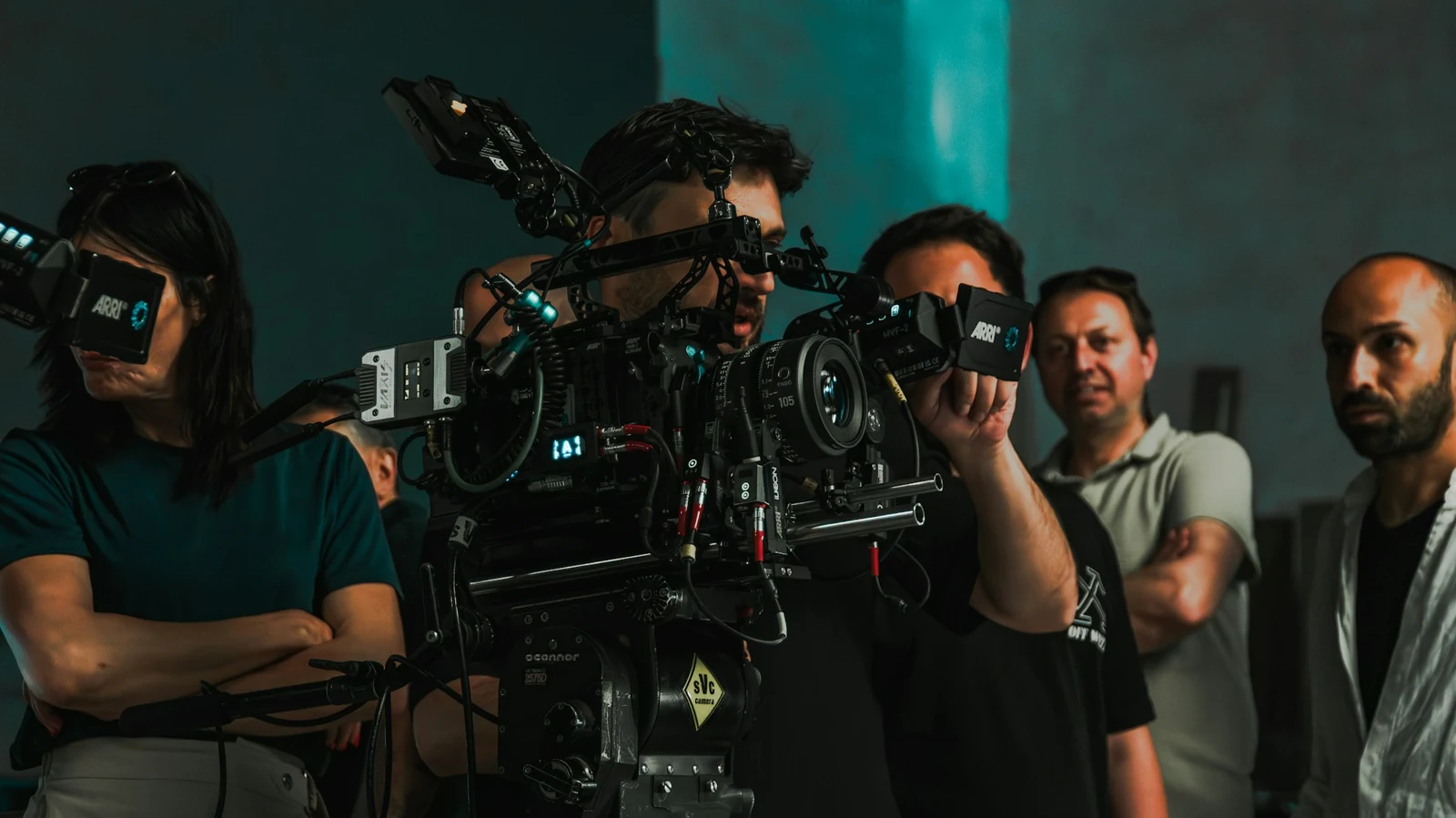
Editorial photograph: Cemrecan Yurtman on Unsplash. The photograph illustrates a production setting.
A useful film production brief explains what the film needs to communicate and where people will see it. It gives the creative and production teams enough context to make decisions without treating every detail as fixed before the conversation begins. At Heavenkeys, the brief is the starting point for discussing development, pre-production, production, post-production and delivery.
Start with the audience and the purpose
Write down who the film is for, what those viewers already know and what you want them to understand after watching. A film introducing a company to prospective customers needs a different structure from a film explaining a process to staff. Describe the intended viewer in everyday language. Then name one main purpose: introduce an idea, explain a service, document an event or tell a particular story.
Separate that purpose from distribution. A festival submission, a presentation, a website feature and a social campaign each create different viewing conditions. List the intended channels, whether sound will usually be available and any known restrictions on running time or aspect ratio. These decisions influence both the shoot and the edit.
Explain the story before specifying shots
Share the core message, important people or places, and any source material. That might include an existing script, interview topics, archive footage or a written description of the story. If the script is still open, say so. A treatment can establish tone, sequence and visual direction before the team develops a detailed shooting plan.
A clear brief connects the story to the audience and the final delivery.
References are helpful when you explain the part you like. Identify the pace, lighting, interview style or use of sound. A reference film cannot establish the resources or permissions available for your own production. Discuss those separately so that the proposed approach reflects the actual brief.
Make practical requirements visible
List locations, access arrangements, participants and any dates that cannot move. Explain whether a site has restrictions on noise, lighting or filming hours. Identify who will coordinate access and approvals. If contributors, music or archive material are involved, clarify who is responsible for obtaining the necessary permissions before those assets are used.
Describe the available budget range and the deadline for the finished master. The production plan should also allow time for preparation, editing and review. A shoot date alone does not describe the full schedule. When a requirement is uncertain, mark it as a question rather than silently treating it as settled.
Agree how the film will be reviewed
Name the person who consolidates feedback and the people who approve the final result. Conflicting comments can slow an edit when reviewers respond separately. A shared review process makes it easier to distinguish factual corrections, creative preferences and changes to the agreed scope.
Discuss the expected review stages: treatment, script or storyboard, first edit, finishing and final approval. Specify whether captions, titles, logos, colour work and sound finishing belong in the agreed deliverables. The exact stages will depend on the production.
Define the files you need at handover
Confirm the master format, aspect ratios, captions and any shorter versions before production. An additional vertical edit may require different framing from the start. Ask which files will be delivered and how they will be transferred, stored and maintained. Source files and project files should be discussed explicitly rather than assumed.
Ready to discuss the brief? Explore film production, video production and our work, or tell us about the project.