Skip to content

Technology businesses.

Explain your product, guide account setup and build the application interface.
Engineer inspecting servers and network equipment
HEAVENKEYS / INDUSTRY

Digital work built around your industry.

Websites, applications and connected workflows shaped around your customers, your team and the information you maintain.

Discuss your project ↗
Your context matters
We build product websites, onboarding flows and application interfaces. Our AI services cover LLM features, agents, knowledge search and cloud deployment when these are part of the product.
Connected capabilities

What we can build for technology businesses.

Connected product platform
Product tasks cross several systems with unclear ownership.

What we can build: We can build interfaces and backend workflows around documented data sources, role boundaries and explicit processing states. Integrations need visible error handling and a support route.

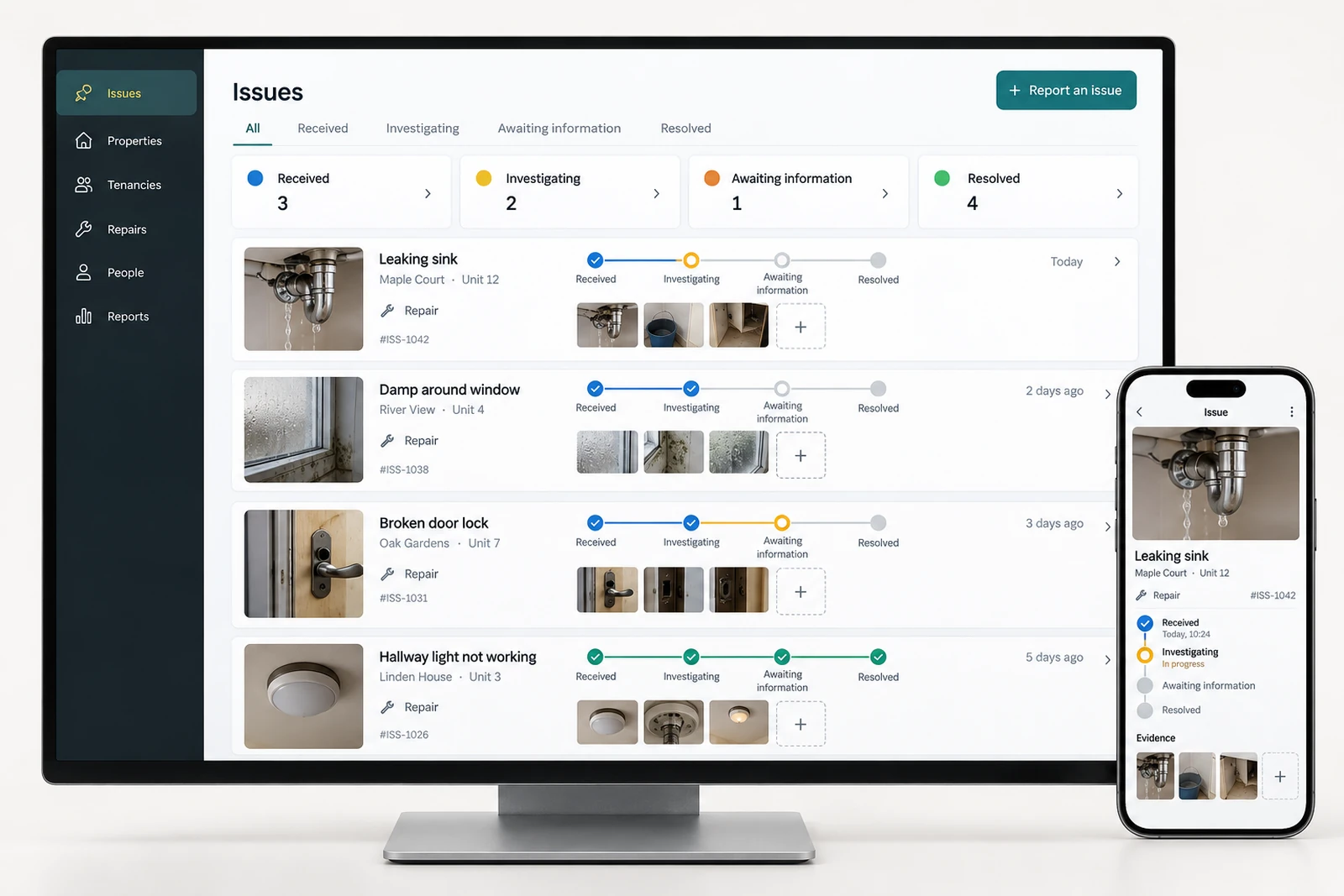
Issue evidence and support tracking
Support reports lack task context and customers cannot see progress.

What we can build: A portal can collect the relevant product state, screenshots or permitted video and show received, investigating, awaiting information and resolved stages. Sensitive logs are minimised and access controlled.

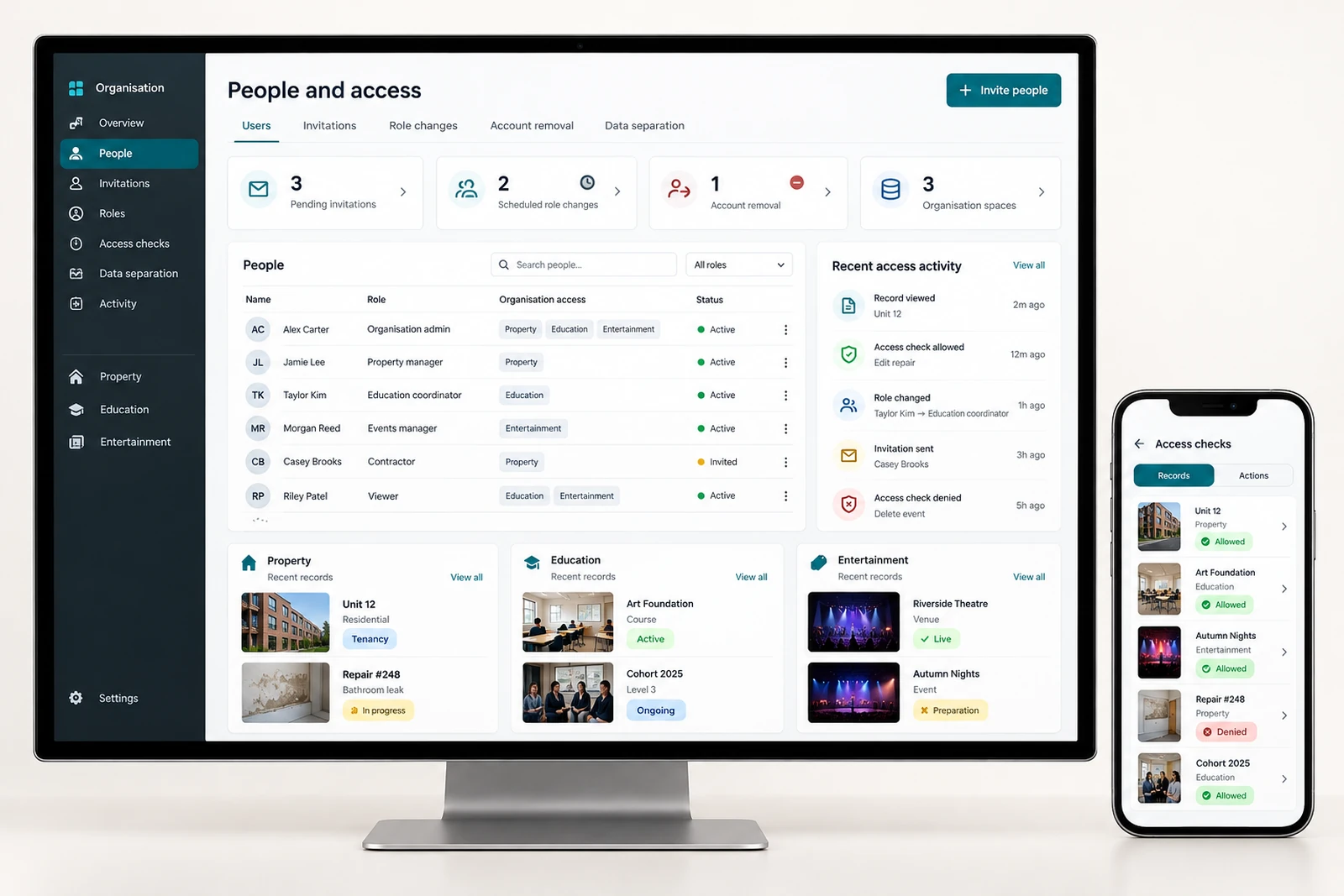
Organisation and access management
Customers or staff have permissions that no longer match their role.

What we can build: We can plan invitations, role changes, account removal and organisation-level data separation. Server-side access checks govern both record retrieval and actions.

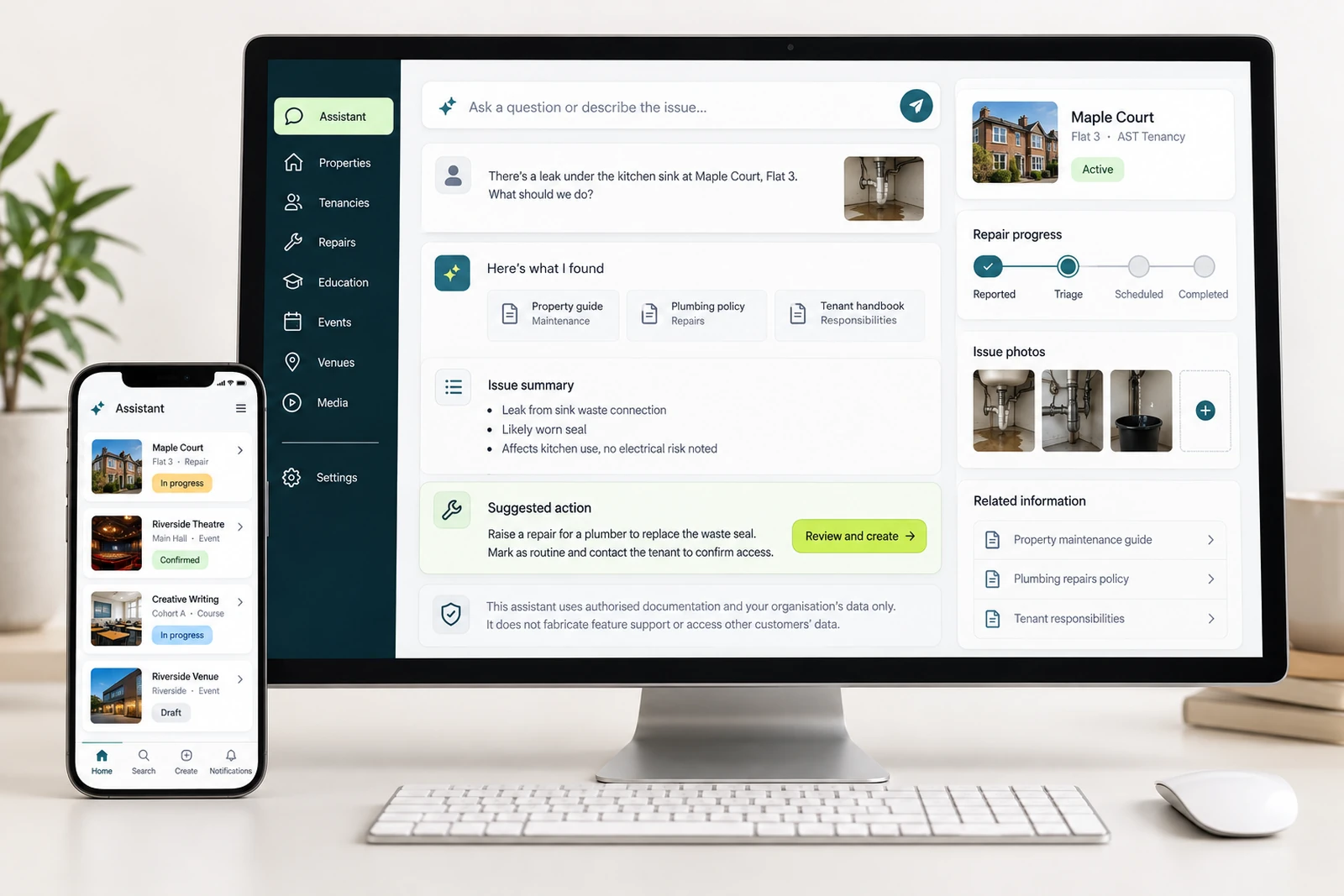
AI workflow and support assistant
Users struggle to find approved technical guidance and complete repetitive tasks.

What we can build: An assistant can retrieve authorised documentation, summarise an issue and suggest an action with visible review where needed. It does not fabricate feature support or cross customer data boundaries.

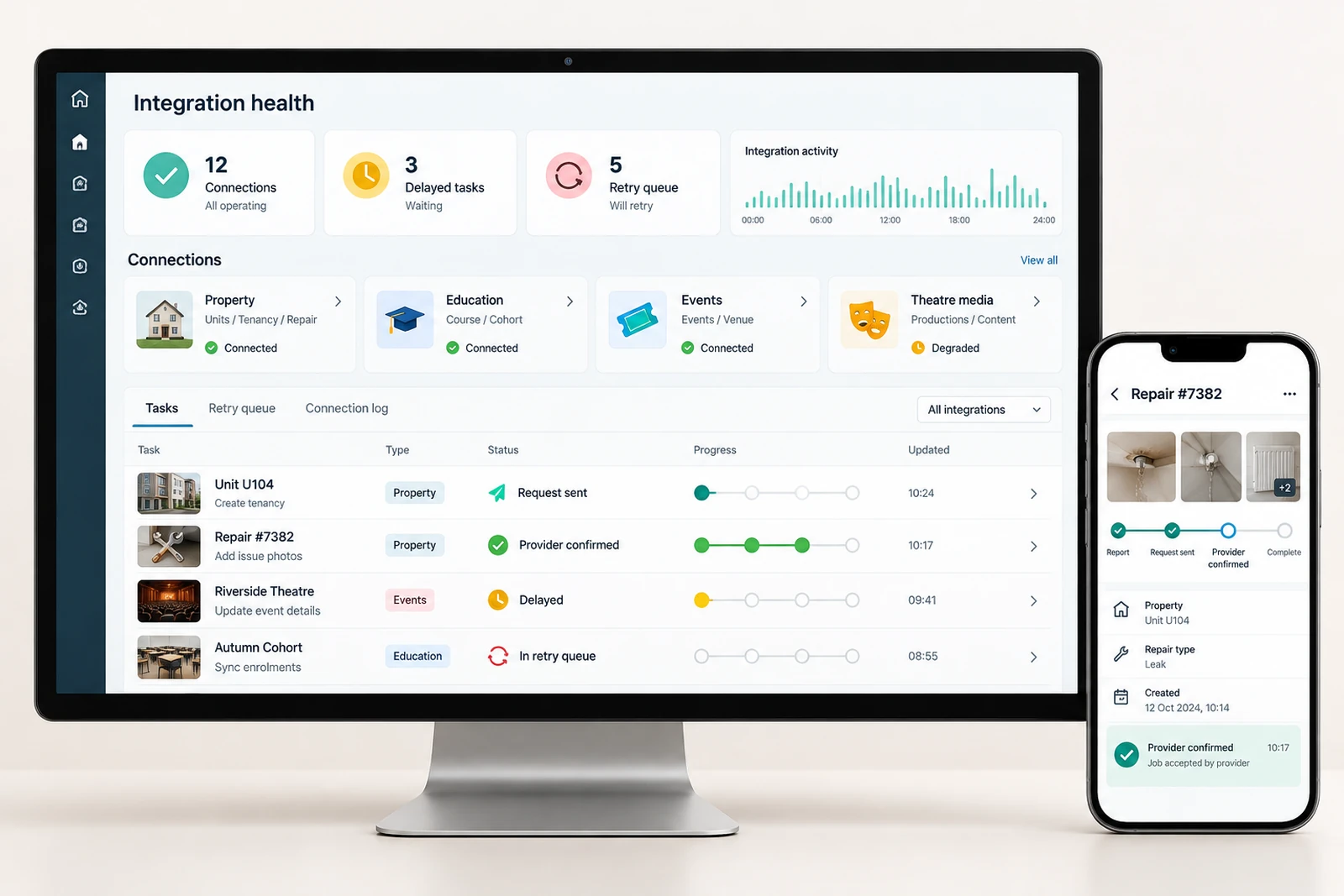
Integration health dashboard
Failed provider exchanges are hidden behind generic success messages.

What we can build: A dashboard can show connection states, delayed tasks and retry queues. Staff can distinguish a request being sent from a provider-confirmed operation.

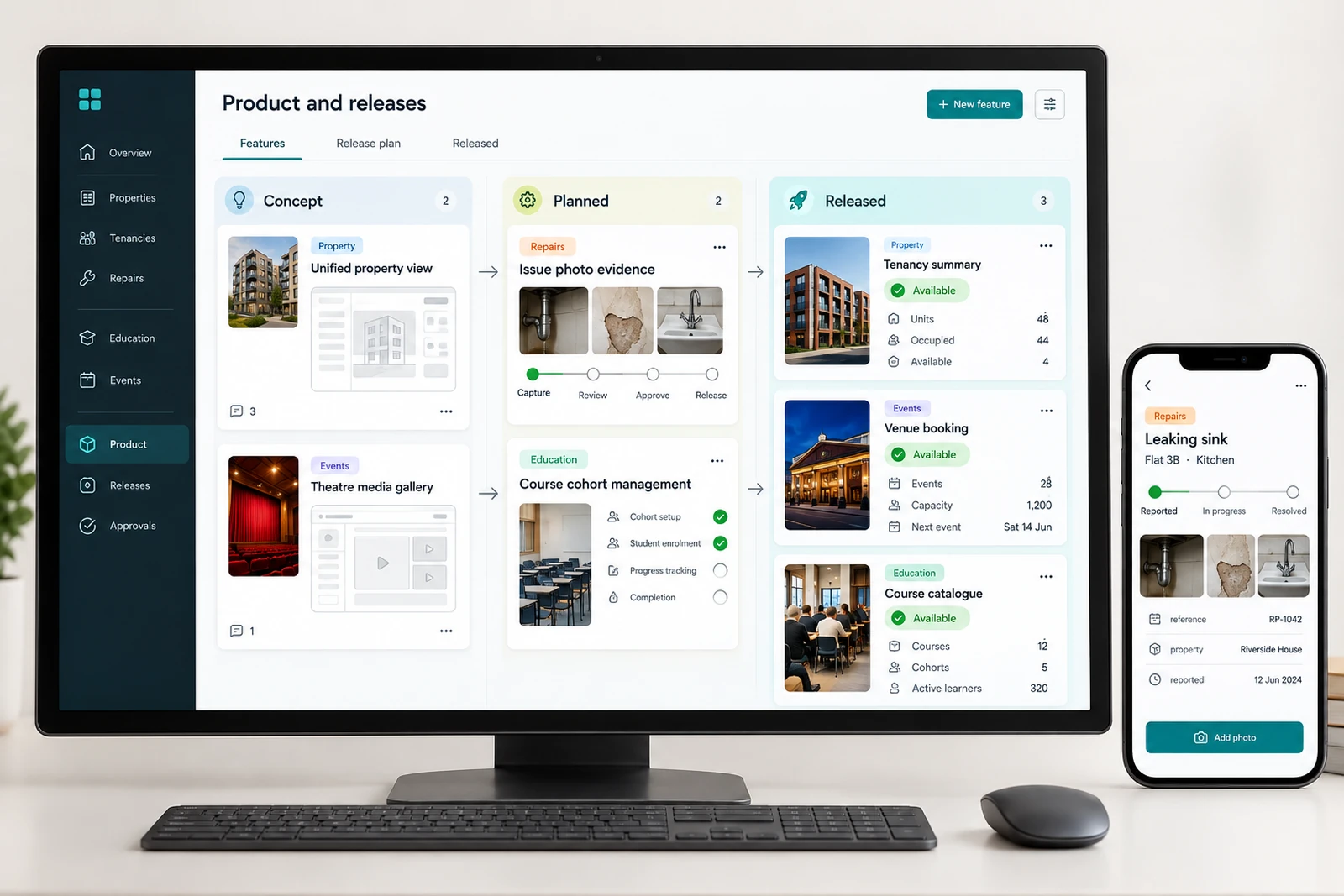
Product and release communications
Marketing pages promise functionality that the product does not yet support.

What we can build: An approval workflow can connect public feature descriptions to the released product version. Concept visuals, planned features and currently available behaviour remain distinguishable.

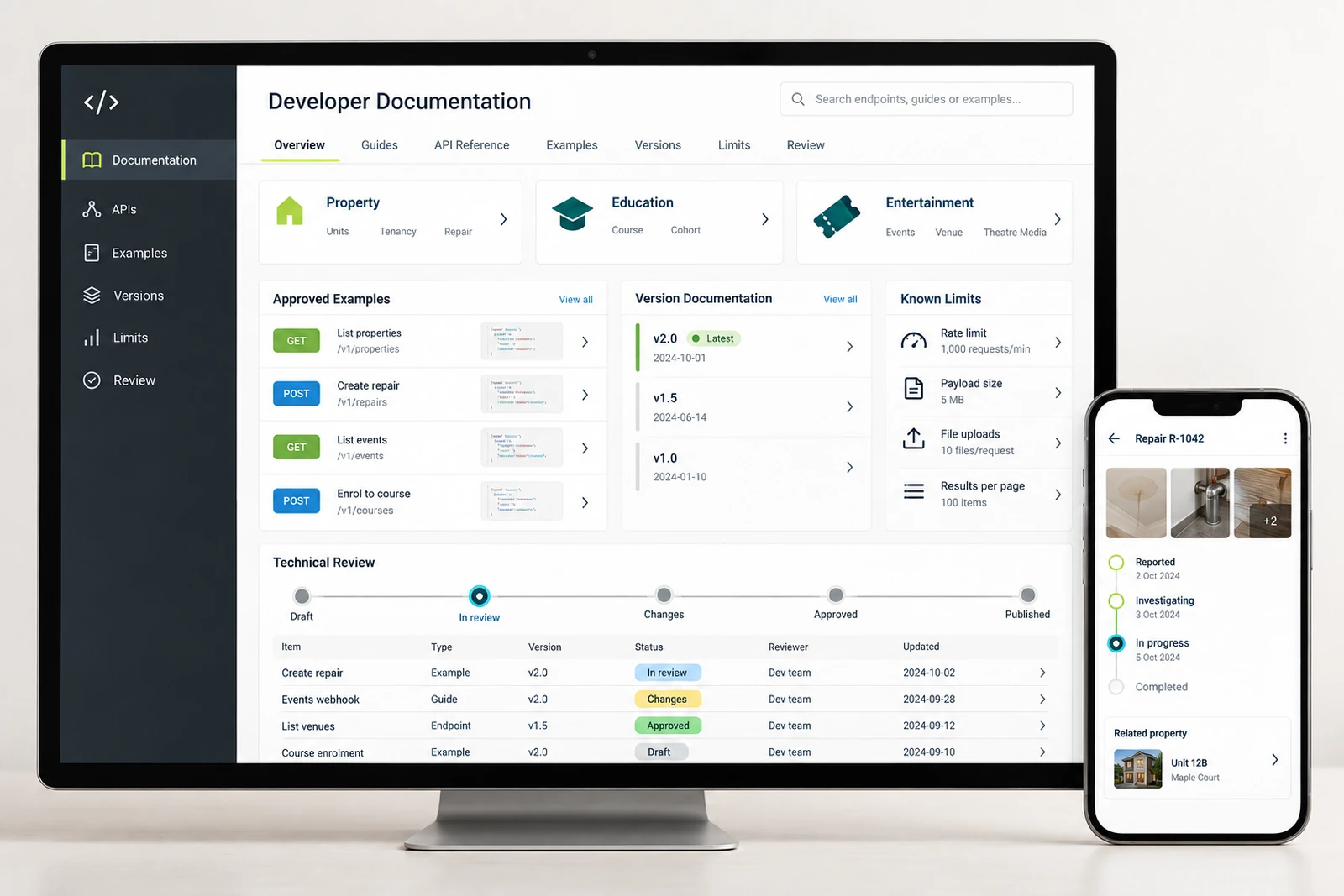
API and developer documentation
Users cannot find current setup requirements or supported operations.

What we can build: A documentation system can organise approved examples, version-specific instructions and known limits with technical review before publication.

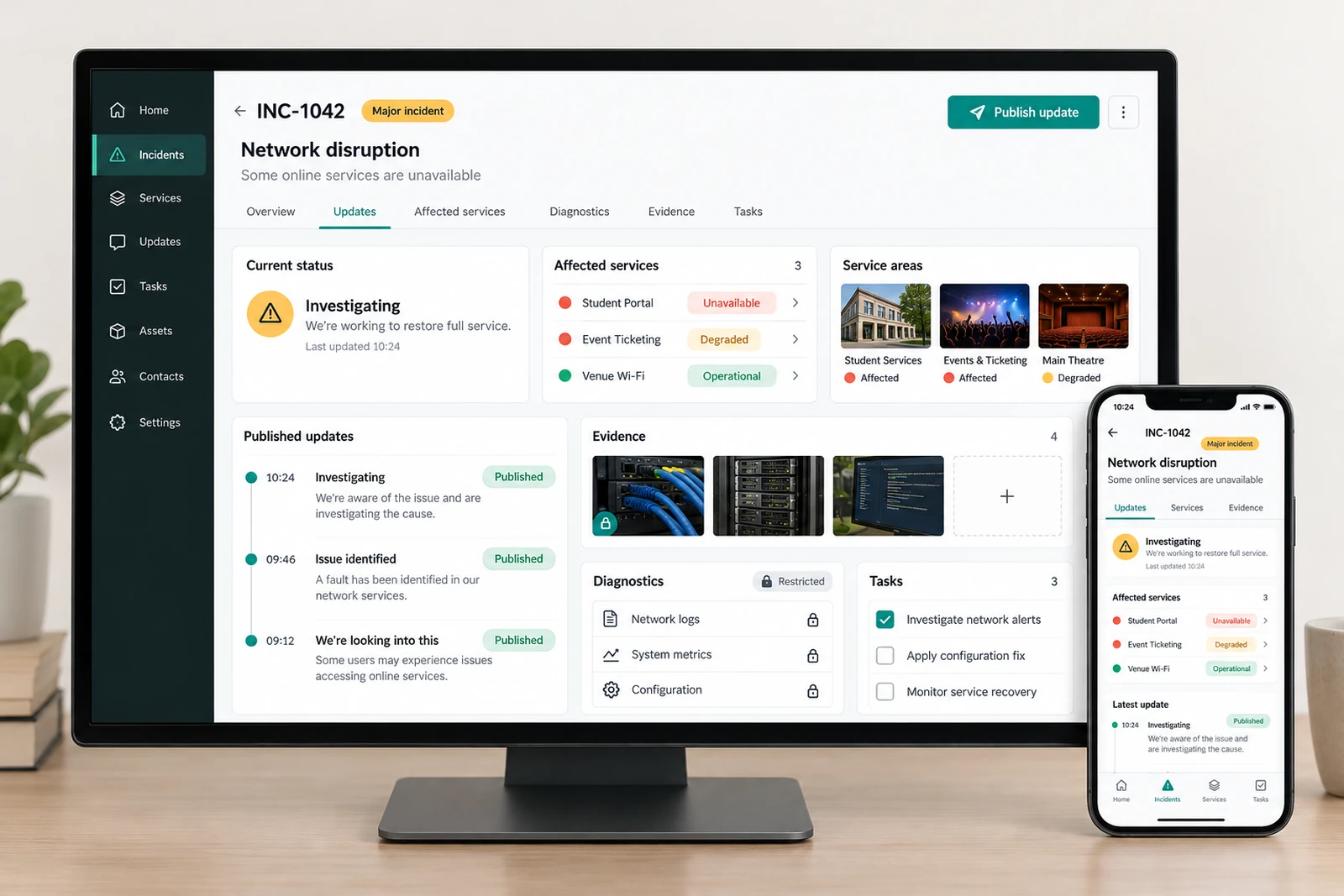
Incident and service communications
Customers receive unclear updates during product issues.

What we can build: An incident workflow can publish approved status updates and show affected services, while internal diagnostics remain restricted.

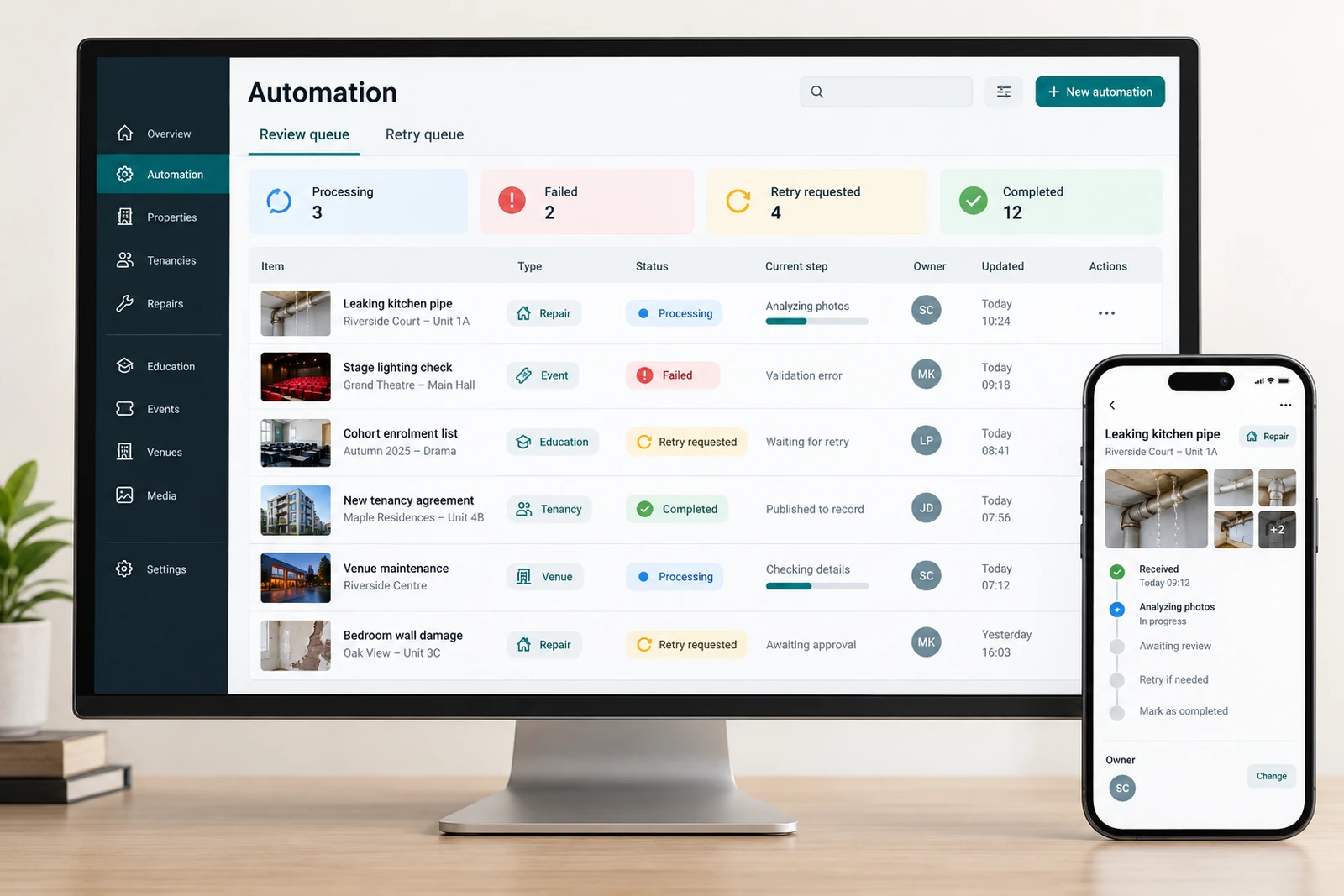
Automation review and retry queues
Failed automated tasks are silently lost or duplicated.

What we can build: A reviewed queue can show processing, failed, retry requested and completed states, with safeguards around repeated actions and clear staff ownership.

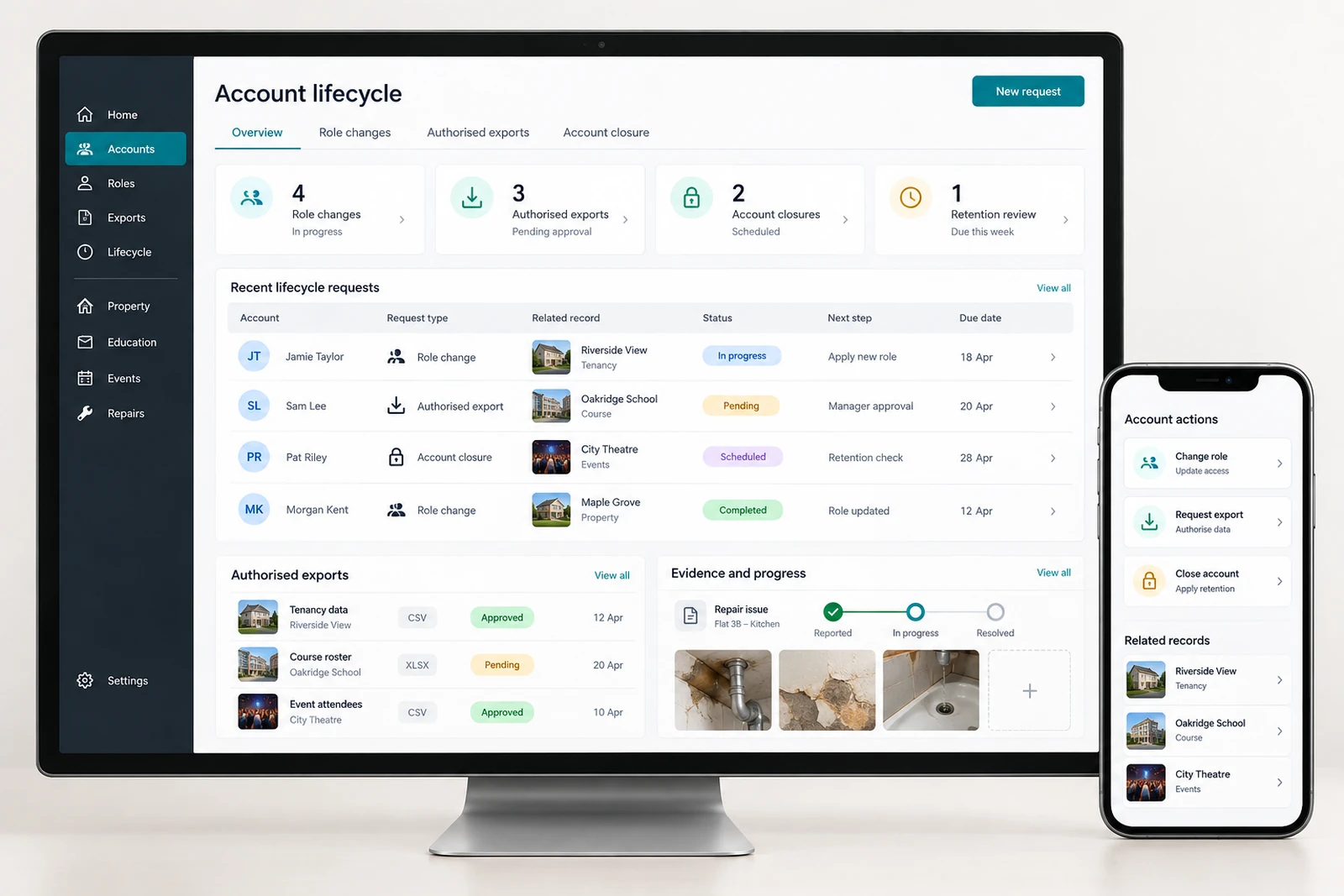
Account export and lifecycle administration
Organisation changes leave stale access or unclear record ownership.

What we can build: A scoped lifecycle workflow can handle role changes, authorised exports and account closure according to agreed retention and access rules.

PAIN POINTS AND POSSIBLE SOLUTIONS

Platforms that support the everyday work.

These are systems we can scope and build around your operations. Features, integrations and responsibilities are agreed for your project; they are not claims that every capability is already available in a finished product.
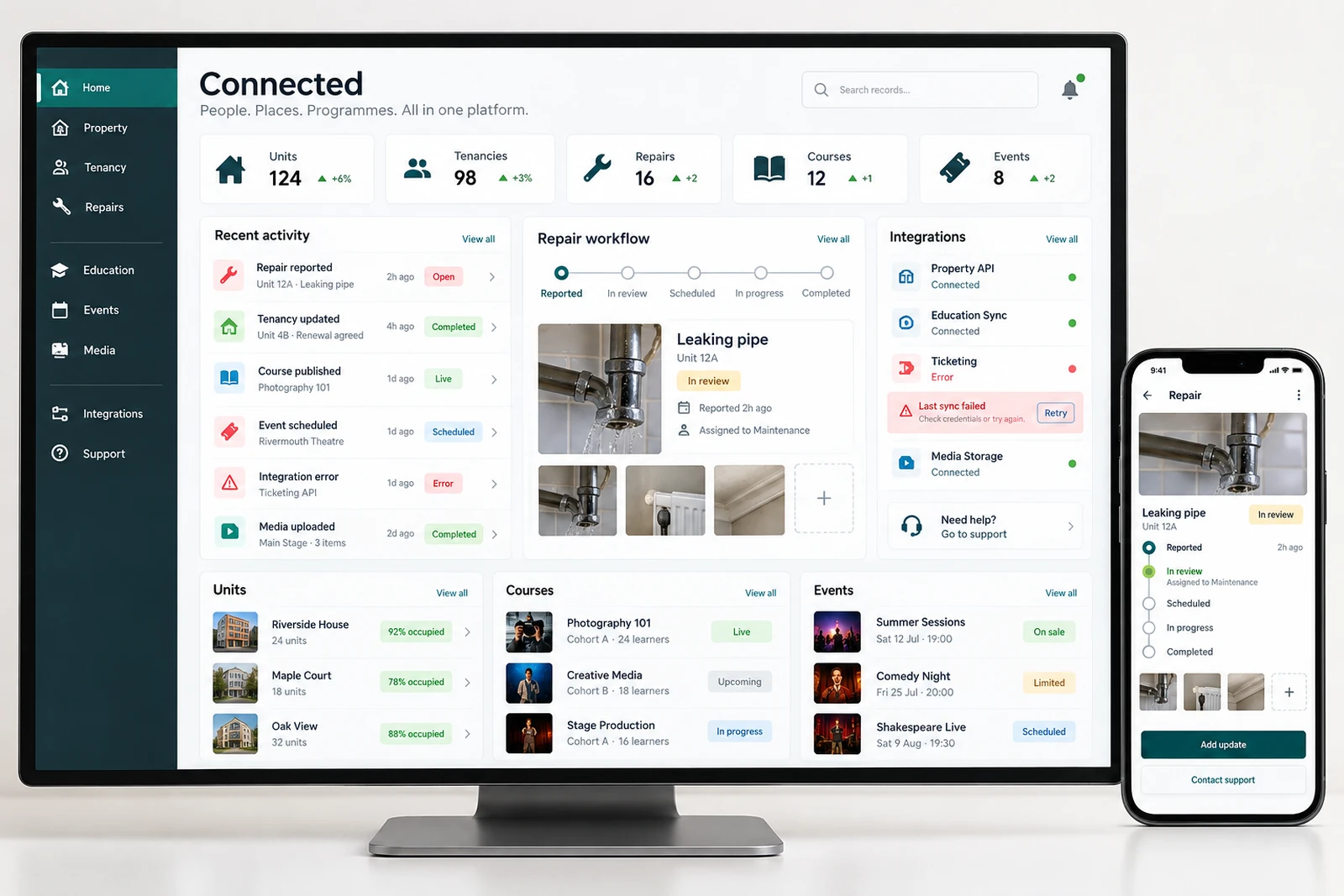
Technology businesses — Connected product platform interface concept

Connected product platform

The problem: Product tasks cross several systems with unclear ownership.
What we can build

We can build interfaces and backend workflows around documented data sources, role boundaries and explicit processing states. Integrations need visible error handling and a support route.

Technology businesses — Issue evidence and support tracking interface concept

Issue evidence and support tracking

The problem: Support reports lack task context and customers cannot see progress.
What we can build

A portal can collect the relevant product state, screenshots or permitted video and show received, investigating, awaiting information and resolved stages. Sensitive logs are minimised and access controlled.

Technology businesses — Organisation and access management interface concept

Organisation and access management

The problem: Customers or staff have permissions that no longer match their role.
What we can build

We can plan invitations, role changes, account removal and organisation-level data separation. Server-side access checks govern both record retrieval and actions.

Technology businesses — AI workflow and support assistant interface concept

AI workflow and support assistant

The problem: Users struggle to find approved technical guidance and complete repetitive tasks.
What we can build

An assistant can retrieve authorised documentation, summarise an issue and suggest an action with visible review where needed. It does not fabricate feature support or cross customer data boundaries.

Technology businesses — Integration health dashboard interface concept

Integration health dashboard

The problem: Failed provider exchanges are hidden behind generic success messages.
What we can build

A dashboard can show connection states, delayed tasks and retry queues. Staff can distinguish a request being sent from a provider-confirmed operation.

Technology businesses — Product and release communications interface concept

Product and release communications

The problem: Marketing pages promise functionality that the product does not yet support.
What we can build

An approval workflow can connect public feature descriptions to the released product version. Concept visuals, planned features and currently available behaviour remain distinguishable.

Technology businesses — API and developer documentation interface concept

API and developer documentation

The problem: Users cannot find current setup requirements or supported operations.
What we can build

A documentation system can organise approved examples, version-specific instructions and known limits with technical review before publication.

Technology businesses — Incident and service communications interface concept

Incident and service communications

The problem: Customers receive unclear updates during product issues.
What we can build

An incident workflow can publish approved status updates and show affected services, while internal diagnostics remain restricted.

Technology businesses — Automation review and retry queues interface concept

Automation review and retry queues

The problem: Failed automated tasks are silently lost or duplicated.
What we can build

A reviewed queue can show processing, failed, retry requested and completed states, with safeguards around repeated actions and clear staff ownership.

Technology businesses — Account export and lifecycle administration interface concept

Account export and lifecycle administration

The problem: Organisation changes leave stale access or unclear record ownership.

What we can build

A scoped lifecycle workflow can handle role changes, authorised exports and account closure according to agreed retention and access rules.

Engineer inspecting servers and network equipment

Explain your product, guide account setup and build the application interface.
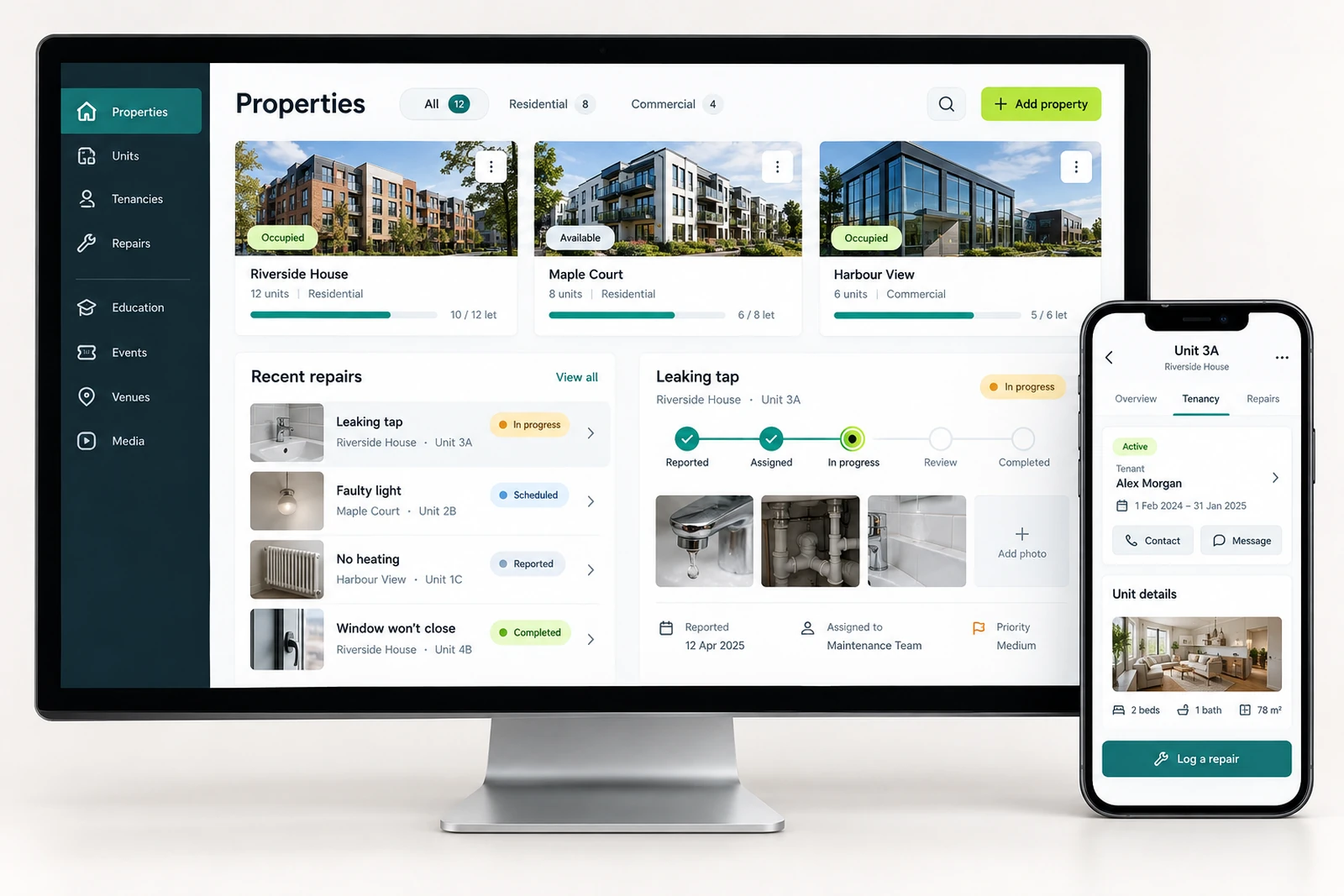
Technology businesses — Product websites interface concept

Product websites

Explain what the product does, who it serves and how to try it or contact your team.
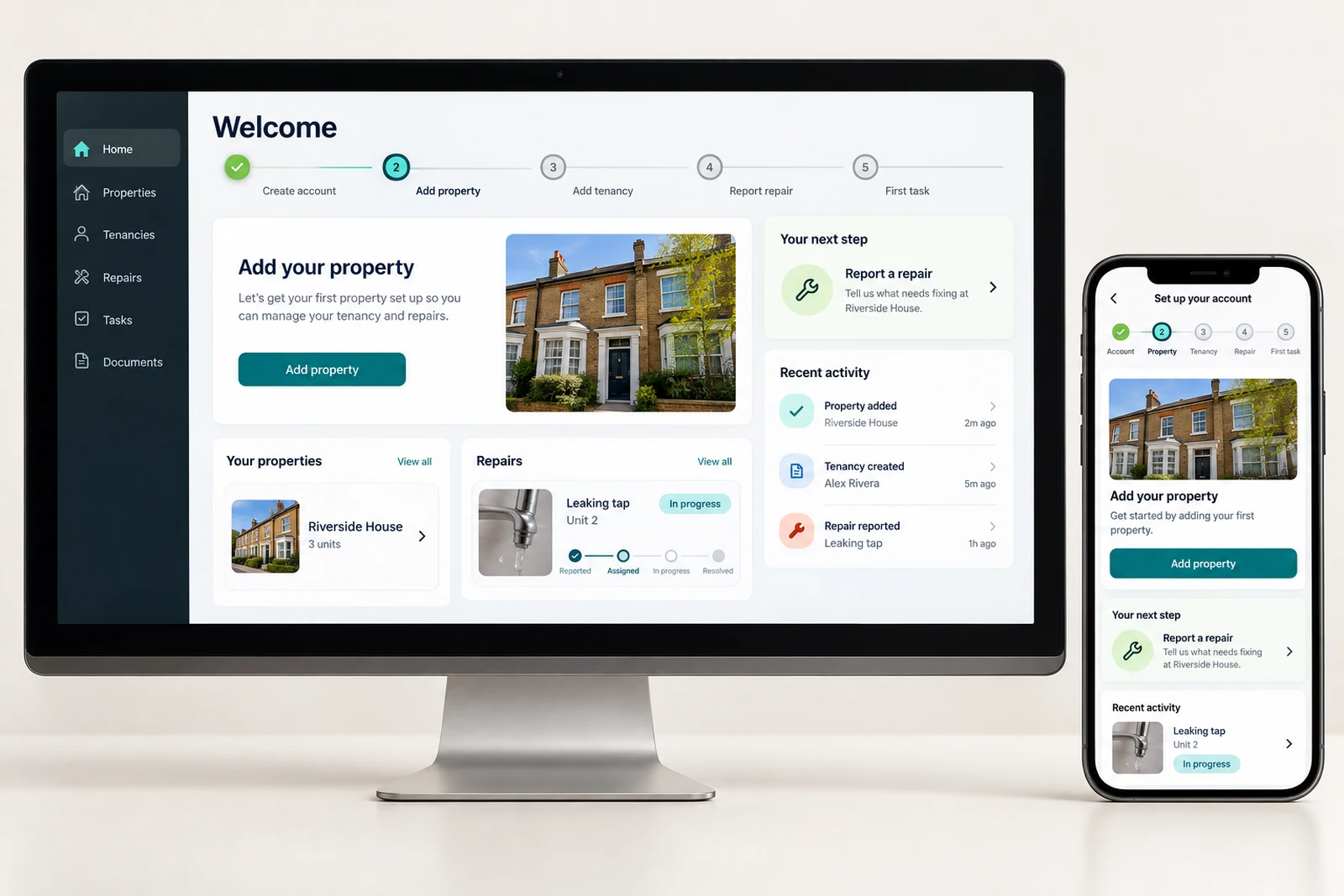
A product website should explain the product through the tasks it supports. Your team supplies accurate feature descriptions, technical limitations and integration information. Demonstrations and screenshots should reflect the version being presented, with conceptual screens labelled as such.

Technology businesses — Onboarding flows interface concept

Onboarding flows

Help users set up their account and reach the first task they need to complete.
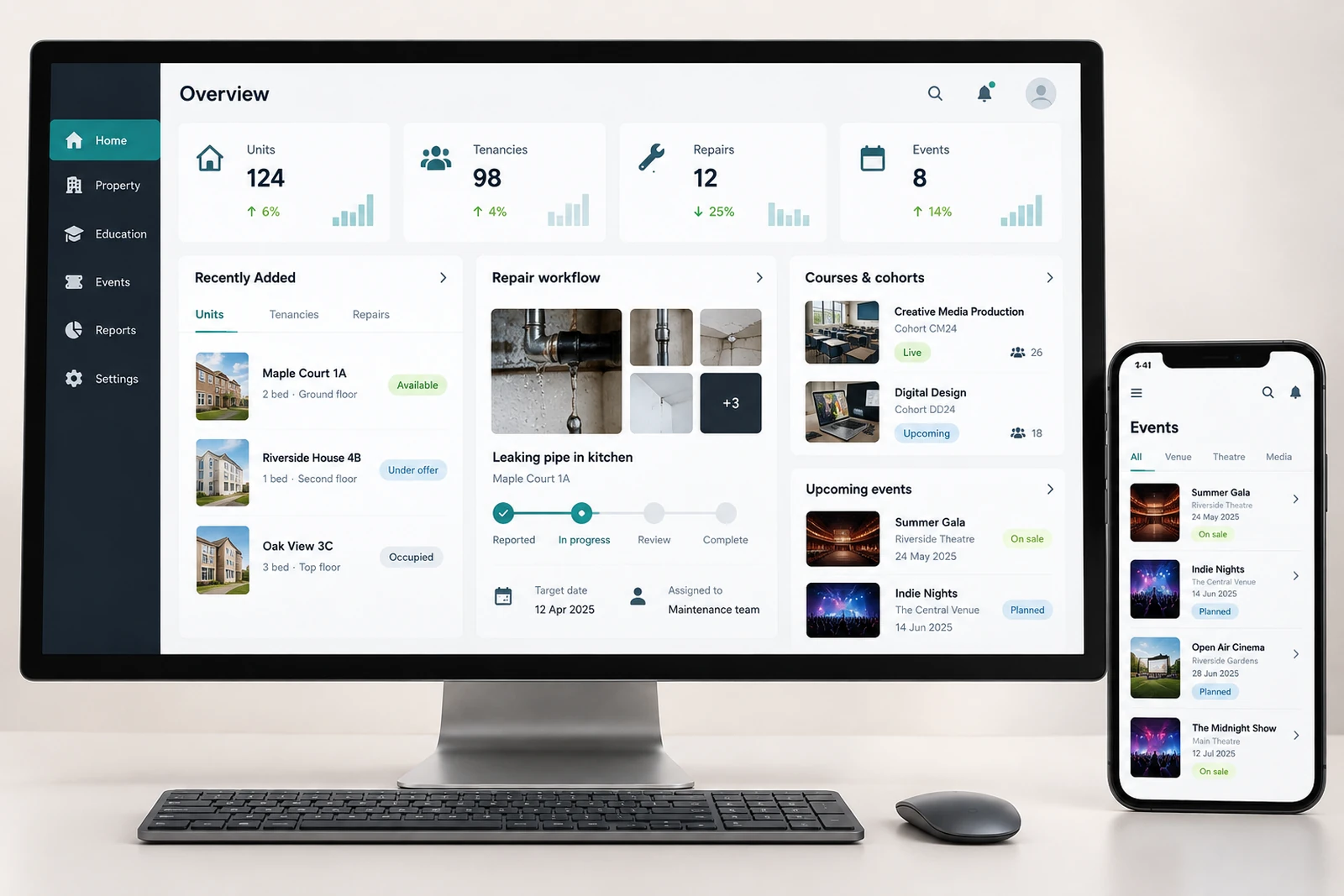
Onboarding should help a user reach the first useful action with the necessary setup completed. We review invitation, verification and incomplete-setup states. Permission requirements and integration failures should be explained where the user can act on them.

Technology businesses — Application interfaces interface concept

Application interfaces

Design and build the screens, controls and feedback that support everyday product use.

Application interfaces need loading, empty, error and success states as well as a populated dashboard. We review the actual records and operations behind each screen. Keyboard use, clear feedback and predictable navigation are checked alongside the visual presentation.

Planning and delivery

A clear route from requirements to release.

Understand
We discuss your users, requirements and constraints, then agree on the scope.
Design
We map the main tasks and use prototypes to review the screens and flow.
Develop
We build in stages, share working versions and test the agreed features.

GOOD QUESTIONS

Planning your technology businesses project.

Do we need to replace all our existing tools?

No. We review what you already use and look at whether integration, a focused improvement, or a new build is the best fit.

Can the project be delivered in stages?

Yes. We can organize the work around a first useful release and a prioritized list of later improvements.

How do you learn about our requirements?

We discuss your audience, everyday workflow, content, integrations, and constraints before proposing a solution.

Explore all industries · Explore our services

Discuss your project ↗