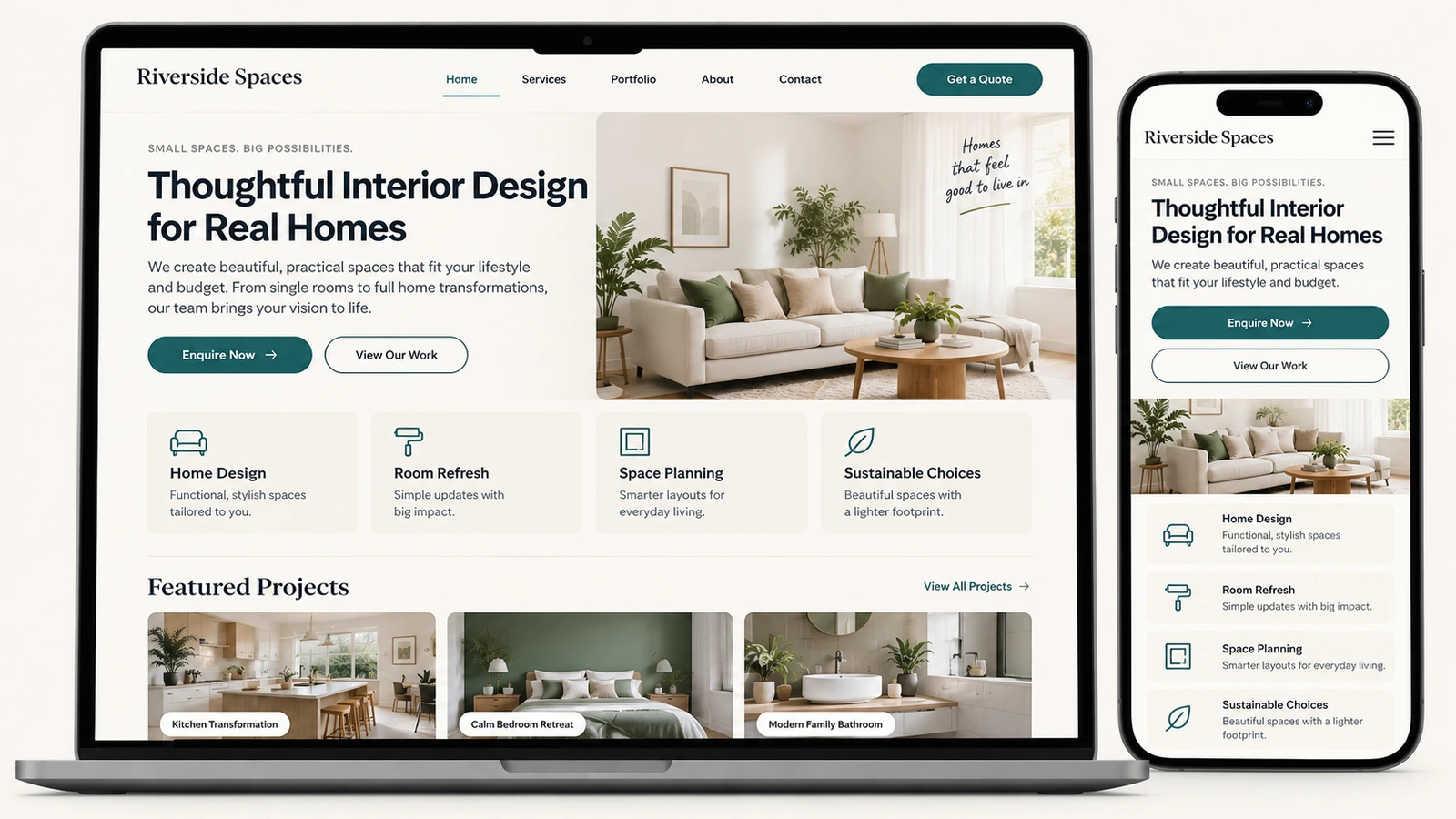

Detailed service guide
Landing pages explained
Heavenkeys provides landing pages from Ottawa–Gatineau. Create a page for a service, launch or campaign with a clear next step. This guide explains the work in everyday language: the purpose, the activities we can discuss, the material needed, the decisions to make and the result to review. Start with the service explanation and published scope, or use the contents to jump to a planning question. You can read it before an enquiry and return to individual sections while preparing a brief.
The examples describe possible situations rather than completed client assignments. What your project includes is established through its own brief and agreement. The guide is organised around a visitor arriving from a specific campaign, with particular attention to message hierarchy, focused content, a clear action and measurement. It explains why these areas matter and how they relate to the people who will use or review the work. It also sets out preparation, feedback, verification and handover questions so you can understand the practical responsibilities before choosing the next step.
Helping a visitor understand and take the next step
A business website connects the visitor’s question to a useful answer and a clear next action. The visitor may arrive through search, a shared link or a campaign. They should be able to understand what the business offers, whether it is relevant and how to continue. A visual direction supports that task, but it does not replace accurate service information and a workable contact or purchasing journey.
Content structure begins with the important visitor questions. Identify which pages answer them and how those pages relate. A service page should have a clear purpose rather than repeat the same general message under a different title. Navigation labels should help a person predict what they will find. The structure can include links to related details when those links help the visitor make a decision.
Responsive design considers how the content and actions work at different screen sizes. It is more than shrinking the same arrangement. A long heading, a comparison or a form may need a different layout on a phone. Review realistic content and important tasks at the relevant sizes. The aim is to keep the meaning and the next action understandable as the available space changes.
Forms and enquiry journeys need clear labels, useful feedback and an agreed destination. Explain what the visitor is asked to supply and what happens after submission. Check the receiving process as well as the visible form. A person seeing a success message is not enough if the business does not receive the enquiry as intended. Any follow-up responsibility belongs in the operating discussion.
Content management concerns how your team updates the website. Page types, reusable sections and editing responsibilities should reflect the information the business actually maintains. An editor should understand which fields are required and how changes are reviewed. If the website includes a store, the scope also needs to address the catalogue, product information, fulfilment rules and the purchasing journey. Those requirements should not be assumed from the presence of a product image.
Search foundations help machines and people understand the pages. Clear titles, descriptions, crawlable content and meaningful internal links are part of that foundation. They do not guarantee a ranking. Keep business information accurate and the page useful for its intended audience. The website’s ability to explain the service and support the next step remains the central reason for creating it.
The published scope of this service
Landing pages
We organize the page around the audience, the offer, the questions that need answering, and the action you want visitors to take. The design works as a complete story on a small screen.
Message hierarchy
Decide what visitors need to understand first and which details support the offer.
Focused page design
Arrange the offer, supporting information and call to action on one page.
Enquiry journey
Plan the form or next step and the confirmation visitors receive after submitting.
Mobile layout checks
Check text, images, forms and controls on the agreed mobile screen sizes.
Website Design
Business websites, online stores and redesigns.
What this service is for
Landing pages starts with a practical question: what needs to become clearer, work more reliably or be easier for someone to complete? Create a page for a service, launch or campaign with a clear next step. The purpose of a project is to connect that need to an understandable piece of work. A service name describes an area of expertise; it does not, on its own, define every feature, file, platform or responsibility that will be included in your project.
Consider a visitor arriving from a specific campaign. That example gives us a person, a task and a setting to investigate. We can ask what the person knows at the beginning, what they need to do next and how they recognize a successful result. We can also ask who takes responsibility when something goes wrong. These questions are useful even when you already have a strong visual direction or a preferred technical approach.
Our published service scope includes message hierarchy, focused content, a clear action and measurement. Depending on the brief, the work may involve several of these areas or concentrate on one. We discuss which areas are relevant before choosing a sequence of activities. A focused project can be valuable without including every possible option listed in this guide.
The guide explains decisions you can make with Heavenkeys. It describes possible activities, review questions and useful preparation. The final scope, deliverables, fees, schedule and responsibilities are agreed for your project. Illustrative examples explain the work; they are not claims about named customers, completed assignments or guaranteed business outcomes.
When this work is a good fit
A useful starting point is a repeated difficulty that you can describe in everyday language. You might say that people cannot find the right information, that a handoff takes too much effort, that the current experience is inconsistent, or that your team cannot judge whether a proposed direction is ready. An observable difficulty is easier to investigate than a broad request to make everything more modern.
For this service, the example is a visitor arriving from a specific campaign. Look at the task before and after the moment where the difficulty occurs. Sometimes the visible problem is caused by missing information earlier in the process. Sometimes the proposed solution depends on a responsibility that no one currently owns. Understanding that connection helps determine whether this service addresses the central problem or only a small part of it.
It can also be sensible to make a limited improvement rather than commission a complete replacement. We can discuss what already works, what needs attention and which constraints are unlikely to change. The scope may be a review, a defined set of deliverables, an initial implementation or a broader programme of work. Those alternatives have different implications for preparation and ongoing ownership.
Bring examples of the difficulty and explain its consequences. Include the person affected, the frequency, the workaround and the uncertainty that remains. We can then compare the problem with the published capabilities of Landing pages. The result of that conversation should be a clearer decision about the next step, including whether another connected service needs to be considered alongside this one.
The people and tasks we need to understand
The same deliverable can be experienced differently by different people. A first-time user may need an explanation that an experienced staff member does not. An owner may need a summary while the person doing the daily work needs more detail. A reviewer may need evidence rather than a polished presentation. These differences influence what we create and how we explain it.
We begin by identifying the people involved in a visitor arriving from a specific campaign. Who starts the task? Who supplies information? Who reviews or approves it? Who receives the result? If a person needs to intervene, how do they find out and what can they change? A short map of these responsibilities is often more useful than a long list of job titles.
Describe the setting as well as the audience. Consider time pressure, distractions, the information already available and the ways a person can interact with the work. We should avoid assuming that everyone uses the same device, understands the same vocabulary or has the same access. A realistic audience description helps us choose appropriate examples for reviews.
The audience map is a working document. It may change when we discover a missing role or an unexpected handoff. We record the reason for a change so that later decisions remain understandable. The aim is not to collect unnecessary personal information. It is to understand enough about the intended task to make the work useful and to agree who must be involved in judging the result.
Reviewing what you already have
An existing project contains more than the most visible deliverable. There may be working materials, source files, records, previous decisions, access arrangements and informal knowledge held by particular people. Before changing anything, it helps to understand which of those items must be retained and which can be replaced. That distinction can affect the entire approach.
For Landing pages, relevant starting materials include campaign context, audience questions and the agreed conversion action. An inventory records what is available, where it lives, who controls it and whether it can be used for the intended purpose. It also records missing items. A gap does not always prevent progress, but it should not disappear from the plan simply because it is inconvenient.
We can compare the current situation with the desired task. Ask what a person can accomplish today, where they need a workaround and what they cannot currently do. Include useful parts of the existing experience. If something works well, preserving it may reduce the effort needed to explain the change and make the transition less confusing.
Avoid relying only on a remembered description. Where practical, show a representative example and explain the circumstances in which it was created. Separate confirmed facts from assumptions. That makes the review easier to follow and gives us a sounder basis for deciding what to investigate next. The output of the starting-point review is a clearer picture of the available material, the important dependencies and the decisions that still need evidence.
Turning the request into a clear brief
A brief translates the initial conversation into a shared description of the work. It should explain the purpose, the intended audience, the relevant starting material and the expected result. It should also identify constraints, responsibilities and decisions that remain open. A useful brief is specific enough to guide work without pretending that every detail has already been settled.
For the example of a visitor arriving from a specific campaign, describe the starting situation and the intended finish in separate sentences. Then describe why the difference matters. If the desired result cannot yet be stated clearly, that is a reason to investigate further rather than choose deliverables prematurely. We can use the brief to distinguish a known requirement from an idea that needs review.
The service areas we consider include message hierarchy, focused content, a clear action and measurement. The brief selects the relevant areas and explains how they relate. It should not quietly expand a narrow request into a much larger project. If another service becomes necessary, we discuss that dependency and its effect on the scope before treating it as an agreed part of the work.
A brief can be revised as understanding improves. Changes should be visible and dated, with the reason and the people involved in the decision. This helps avoid situations in which different participants are working from different versions. The brief is not a substitute for the final agreement; it is a practical reference that makes the scope discussion, review process and subsequent work easier to understand.
Defining the result and its boundaries
A project needs a description of success that can be reviewed. Words such as better, professional, intelligent or effortless express a direction, but they do not explain what must happen. We work towards statements that describe a result, an intended use and a reasonable way to inspect it. This makes the project less dependent on personal interpretation.
Possible outputs for this service include a focused landing page, an enquiry path and measurement definitions. Each output needs its own boundary. What information does it cover? Which audience or workflow is it intended for? Which variations are included? What does it depend on? A result can be useful without addressing every edge case or every future possibility, provided the boundary is clear.
It is equally helpful to record exclusions. An exclusion is not a dismissal of a need; it explains what is outside the current commitment. Some excluded items may become later work, while others may belong to a different provider or an internal responsibility. Recording them protects the meaning of the agreed deliverables and makes future discussion more straightforward.
Review the proposed outcomes with the people who will use, approve and maintain them. Those perspectives can reveal a difference between a presentable deliverable and a usable one. If the reviewers disagree about the purpose, return to the brief before making detailed decisions. Clear outcome definitions give the work a stable direction and provide a reference for deciding whether a change is a correction, an improvement or an expansion.
What requirements mean in practice
A requirement describes a condition the work needs to satisfy. Some requirements concern what a person can do or understand. Others concern compatibility, permitted access, available material, presentation or operational responsibilities. We should distinguish these categories so that a visual preference is not confused with a necessary business rule, and an assumption is not confused with a confirmed dependency.
Use a visitor arriving from a specific campaign to describe requirements in context. Explain who is involved, what information they need and what result they expect. Then consider the alternative situations. What happens when the information is incomplete? What changes when a reviewer is unavailable? Which decisions can the person make independently, and which need approval? The answers reveal requirements that a simple list of features can miss.
For Landing pages, a concrete concern is that the campaign promise and page content do not match. We can turn that concern into a requirement by describing the expected response, the owner and the evidence needed to review it. The goal is to make the requirement testable or inspectable without inventing an unnecessary technical solution too early.
Requirements should have a source and a priority. A source explains why the condition matters; a priority explains its importance to the agreed result. Keep contradictory requirements visible until they are resolved. If a condition cannot be met within the proposed scope, discuss the tradeoff directly. A useful requirements document makes decisions easier rather than becoming a collection of impressive words that no one uses.
Choosing a manageable scope
A scope describes the work that is included and the work that is not. It connects the desired result to the activities, deliverables and responsibilities needed to achieve it. It should be detailed enough that the participants can recognize a change, but it does not need to predict every conversation that will happen during the project.
One way to choose a manageable scope is to identify the smallest complete result that addresses an important need. Complete means that someone can understand or use the result in its intended setting; it does not mean that every possible variation is included. A small deliverable with a clear purpose can provide a better basis for the next decision than a large collection of unfinished parts.
The focus areas for this service are message hierarchy, focused content, a clear action and measurement. We can discuss which areas are necessary now, which depend on another decision and which can wait. The sequence should reflect the dependencies, not simply the order in which items appear on a service page. If an early activity changes our understanding, we can review the remaining scope before committing to an unsuitable direction.
Scope discussions should also include the work expected from your team. Supplying material, reviewing drafts, arranging access and making decisions are real dependencies. If these responsibilities are not included in the plan, a schedule can look plausible while remaining difficult to follow. We aim for a scope that describes a useful result and the practical cooperation required to produce it.
Deciding what to do first
Not every requirement deserves the same attention at the same time. Prioritization helps distinguish what is essential for the intended result from what would be useful later. It also helps reveal dependencies: a small decision may need to happen before a much more visible piece of work can begin. The highest priority is not always the most attractive item in a presentation.
Start by considering the consequences of leaving a problem unresolved. Does it prevent the central task? Does it create confusion? Does it make a review unreliable? Is there an acceptable temporary approach? These questions help us discuss urgency without turning every request into an immediate requirement. A priority should have a reason that another participant can understand.
In a visitor arriving from a specific campaign, examine the earliest point at which the intended result becomes uncertain. That point may deserve investigation before further polish. For example, if the starting information is unreliable, improving the appearance of the final output will not resolve the underlying issue. If the approval process is unclear, producing more versions may create extra work instead of progress.
We can record priorities with the agreed outcome, the dependency and the owner. Review them when the project changes. New information may justify a different order, but the reason should be visible. Prioritization gives the team a shared basis for choosing the next useful activity and makes it easier to explain why a request is scheduled now, deferred or handled through another service.
Preparing information and source material
The quality of the starting material influences the work that follows. A project may need written information, examples, approved assets, records, reference files or details about how a task currently happens. Gathering those items early can make decisions more concrete. It also reveals whether material is missing, inconsistent, out of date or unsuitable for its intended use.
For this service, prepare campaign context, audience questions and the agreed conversion action. Explain where each item came from and whether it is current. Mark anything that is illustrative rather than final. A sample can be useful for exploring an approach, but reviewers should not mistake it for approved project information. If material must remain restricted, describe the boundary before it is shared or reused.
Provide enough context to interpret the examples. A file without an explanation may omit the circumstances that made it important. A record without a definition may be interpreted in several ways. A previous version may contain decisions that are no longer applicable. Short notes about ownership, purpose and limitations can be more useful than sending a large folder with no guidance.
We can use a material inventory to track what has been supplied, what needs review and what is still required. Assign an owner to missing items and discuss their effect on the next stage. Preparation does not require that everything be perfect at the beginning; it requires that the condition of the material is understood and that gaps are handled deliberately.
Making the work understandable
Clear language helps people follow a project and use its results. A person should not need to know the internal terminology of a technical team to understand what is being proposed. We explain an unfamiliar term by connecting it to the task, the expected result or an example. Technical detail belongs where it helps a decision, not where it merely makes a description sound more advanced.
When discussing Landing pages, connect the service terms to a visitor arriving from a specific campaign. Describe what happens in a normal situation, what the person sees and what they can do next. Then explain the exception. This order makes it easier to understand why a capability matters and how it fits into the wider workflow.
Consistent terminology is also useful. If the same action has several names, people may assume that those names describe different things. If different actions share one label, people may not recognize the difference. We can agree a small vocabulary for the important roles, materials and outcomes and use it consistently in the brief, review notes and handover.
Writing should be checked with realistic examples rather than isolated phrases. A heading may sound clear on its own but fail to explain the material beneath it. A short label may be ambiguous when several alternatives appear together. Plain language does not remove necessary detail. It makes that detail easier to interpret, helps participants ask better questions and reduces the risk that a decision is approved without being understood.
Comparing possible approaches
There is often more than one reasonable way to address a need. The right choice depends on the intended task, the available material, the responsibilities your team can maintain and the constraints of the project. We compare approaches against these conditions rather than assuming that a fashionable tool or a visually impressive reference is automatically the best fit.
An approach should explain how it supports a visitor arriving from a specific campaign. It should identify what it depends on and what remains outside its scope. We can consider how easily it can be reviewed, what would need to change later and which responsibilities continue after delivery. These questions help distinguish an attractive demonstration from an approach that is practical in the intended setting.
Comparisons work better when they use the same criteria. A low-effort option and a broader option may both be appropriate, but they should not be described as if they deliver the same result. Likewise, an existing solution and a custom solution have different implications for control, adaptation and ongoing work. The comparison should make those implications visible.
Where uncertainty is significant, a focused review or prototype can help before a larger commitment. The purpose is to answer a decision question, not to produce a miniature version of everything. We can record what the investigation supports, what it does not prove and what should be examined next. An evidence-based comparison makes the chosen approach easier to explain to everyone involved.
Planning the work and its dependencies
A useful work plan shows both activities and dependencies. It explains which decisions or materials are needed before an activity can begin, who is responsible for them and what a reviewer should expect to see. A sequence of dates without those connections can hide the reason a project might slow down or require a change of direction.
The work areas in this service include message hierarchy, focused content, a clear action and measurement. These areas are related, but they do not all need to be handled in a single uninterrupted sequence. Some questions can be explored in parallel; others depend on approved information. We discuss that relationship so that effort is directed towards work that can actually move the project forward.
For a visitor arriving from a specific campaign, identify the point where one person’s work becomes another person’s input. Clarify what must be supplied at that handoff and how the receiver knows it is ready. A handoff with an unclear condition can create repeated corrections, even when both participants are doing their own work carefully. Making the condition explicit can reduce that uncertainty.
The plan should allow for review and adjustment. Review is part of the work, not an interruption to it. If a review reveals a missing requirement, the effect on the remaining activities needs to be discussed. A practical plan makes room for decisions while keeping the agreed boundaries visible. It also helps your team prepare for the moments when their participation is needed most.
Agreeing who owns each decision
Different people may own the business purpose, the source material, the creative direction, operational access or the final approval. Those responsibilities can overlap, but they should not be left implicit. When ownership is unclear, a project can produce technically complete work that no one feels able to approve or maintain.
For Landing pages, name the people who can answer questions about campaign context, audience questions and the agreed conversion action. Identify the person who decides whether the proposed result supports the intended task and the person who will be responsible after delivery. These may be different people. Including both perspectives can reveal a requirement that a single reviewer would overlook.
Decision ownership does not mean that one person must answer every question alone. It means that there is a clear route for gathering input and reaching a decision. We can distinguish advice, review and approval so that participants understand what is expected of them. This also helps avoid treating a passing comment as an agreed change.
Keep a short record of important decisions, including the reason and the version of the work being reviewed. If ownership changes during the project, update the record and confirm who takes over. Clear responsibilities make communication more efficient and help future participants understand why the work took its final shape. They also provide a practical starting point for the handover and the ongoing operation of the result.
How to review a draft or working version
A review should answer a question. It might ask whether the direction supports the audience, whether an important task is understandable, whether the supplied material is accurate or whether an agreed condition has been met. If reviewers do not know the question, feedback can become a mixture of preferences, new requirements and observations that are difficult to compare.
Use the intended task as the starting point. For this guide, that task is a visitor arriving from a specific campaign. Follow the example through the version being reviewed and explain what you expected to happen. Note the point where the result differs from that expectation. Specific feedback makes it easier to distinguish a problem in the work from a misunderstanding of the brief.
Separate different kinds of feedback. An inaccurate fact needs correction. An unclear step needs explanation or redesign. A new use case may require a scope discussion. A personal preference should be considered in relation to the audience and purpose. These distinctions prevent a review from silently changing the definition of success.
Consolidate feedback where practical and identify the decision owner. Conflicting instructions from several reviewers can produce extra versions without resolving the underlying question. We can record the agreed change and the reason, then review the relevant part again. A good review leaves a traceable decision, a clearer version of the work and an understandable list of anything that remains open.
Planning for the situations that do not go as expected
A normal example explains the intended flow, but it does not describe the whole service experience. Information may be incomplete, access may be unavailable, a dependency may change or a person may need to stop and return later. Considering these situations helps prevent a project from working only in an ideal demonstration.
One specific concern for this service is that the campaign promise and page content do not match. We can investigate how that situation is recognized and what should happen next. Should the work stop? Can the person correct the problem? Does another person need to review it? What information should be retained so the situation can be understood without repeating the entire task?
Exceptions should be prioritized according to their relevance and consequences. It is not useful to invent an unlimited list of unlikely events, but it is also unwise to ignore conditions already visible in your everyday work. Bring examples of common exceptions and explain the workarounds currently used. Those examples can guide decisions about recovery and responsibility.
Make the expected response understandable. A person should not have to guess whether a result is complete or whether further action is required. An exception path is part of the overall experience, and it deserves clear wording and review. The goal is a deliberate response to the relevant difficulties, with limits and responsibilities agreed as part of the project scope.
Checking the agreed work
Verification compares the result with the agreed conditions. The form of the check depends on the deliverable: some work is reviewed visually, some is tested through tasks, and some is inspected against a documented specification. The important point is that the check relates to the purpose and the scope rather than relying on a general impression that the work looks finished.
For Landing pages, use representative examples based on a visitor arriving from a specific campaign. Include the information and responsibilities that the task actually needs. A demonstration with ideal material may be useful early in a project, but the final review should make clear whether realistic variations have been considered. Record what was checked and what was outside the review.
Possible outputs include a focused landing page, an enquiry path and measurement definitions. Each output may need a different review method. A document can be checked for accuracy and completeness; a journey can be followed from beginning to end; a final asset can be inspected in its intended setting. Choosing an appropriate method makes the result easier to judge and the evidence easier to interpret.
When a check reveals a problem, identify its effect on the agreed outcome. Correct the relevant issue and review the affected part again. A passing check does not establish every possible future condition. It establishes that the recorded conditions were met in the reviewed setting. This distinction helps maintain a useful, honest record of readiness without overstating what the evidence proves.
Handling changes during the project
A project can reveal needs that were not visible at the beginning. New information may change a requirement, an approved direction may need adjustment or an external dependency may become unavailable. Changes are not necessarily a sign of poor planning. The important question is how they are assessed and agreed.
Describe a requested change in relation to the current scope. Is it correcting an agreed requirement, refining a detail or introducing a new outcome? Those categories have different implications. A correction should not be confused with an optional expansion, and an expansion should not be presented as though it was always included. Keeping the distinction clear protects the meaning of the agreement.
For a visitor arriving from a specific campaign, explain what would happen differently after the change. Identify the affected material, roles and review conditions. We can then discuss the work required, the dependencies and the effect on the remaining plan. A seemingly small request may affect several parts of the result, while a larger-looking request may be isolated and straightforward.
Record the decision before treating the change as part of the work. The record should include the approved scope adjustment and any consequences for deliverables, timing or responsibilities. If the change is deferred, record that as well. A clear change process makes it easier to respond to new information without losing track of what the team has actually agreed to deliver.
Making delivery useful for your team
Delivery is more than transferring a file or showing a final version. Your team needs to know what has been supplied, how it is intended to be used and which responsibilities remain. A handover should connect the completed work to the people who will operate, publish, maintain or commission further changes to it.
For this service, discuss the handover of a focused landing page, an enquiry path and measurement definitions. The agreed package should identify the relevant files or access arrangements, the purpose of each item and any limitations. Explain how a person can tell which version is approved. If source materials, working files or additional formats are required, those requirements should be discussed rather than assumed.
Guidance should be proportionate to the task. Some deliverables need a short explanation; others need a walkthrough, operating notes or a record of important decisions. We can discuss which form helps the intended owner use the work confidently. The handover should avoid overwhelming the team with material that has no clear purpose.
Confirm the next point of contact and the responsibilities after delivery. Identify what is covered by the agreed follow-up, what requires a new request and what belongs to your team or another provider. A useful handover leaves the recipient with a clear understanding of the result and a practical route for using it, addressing questions and planning later changes.
What happens after delivery
The intended result may need to be used, published, maintained or reviewed after the project ends. Those activities should be discussed while the work is being planned. A successful handover can still lead to confusion if no one knows who owns the next update, who reviews new material or who responds when the conditions change.
Consider what happens after a visitor arriving from a specific campaign. Who receives the result? Who uses it again? Which source information could change? Which decisions need to be revisited? The answers help identify ongoing responsibilities without implying that every project requires the same support arrangement. Some deliverables need occasional updates; others are part of a continuing operational process.
For Landing pages, the ongoing plan should distinguish maintenance of the delivered work from new capabilities or a new brief. A change in purpose may need a new scope discussion. A change in underlying information may require a review. The distinction helps your team make requests that can be assessed clearly rather than assuming that every future need is covered by the original delivery.
Keep the relevant records accessible to the people who need them. Approved versions, operating notes, access ownership and important decisions can make later work much easier to understand. We can discuss a practical approach to those records during handover. The aim is to leave your team with a result they can use and a clear understanding of how responsibilities continue.
Understanding whether the work helps
Measurement should reflect the purpose of the work. A visible increase in activity is not automatically a useful outcome, and a technically correct result is not always easy for people to use. We start by identifying the question the measurement should answer. That makes it easier to choose evidence that supports a decision rather than collecting numbers without a clear interpretation.
In the example of a visitor arriving from a specific campaign, consider what would indicate that the task has become clearer or more reliable. You might inspect completion, corrections, review effort, repeated questions or the quality of the final result. The relevant evidence depends on the service and the intended setting. We should avoid using a metric simply because a platform makes it easy to display.
Define the terms behind a measure. Explain the period, the audience, the source and any missing information. A comparison is difficult to interpret when those conditions change without being recorded. If the project begins without a useful baseline, we can discuss how to establish one rather than inventing a previous result.
The measurements do not establish guaranteed rankings, revenue or other business outcomes. They help your team understand what is happening and choose the next action. Combine quantitative observations with the context of real tasks and feedback. This can reveal why a result changed and whether the next improvement belongs within this service, a connected service or a different business process.
What affects effort, timing and cost
Effort depends on the work required, the quality of the starting material, the number of relevant variations and the decisions that must be made. Timing also depends on access, approvals and external responsibilities. A useful estimate explains those conditions. It should not treat every project with the same service name as though it requires an identical amount of work.
For Landing pages, discuss the scope of message hierarchy, focused content, a clear action and measurement. A defined activity can have a very different level of effort depending on the existing material and the intended result. The example of a visitor arriving from a specific campaign can help reveal where that difference comes from. It shows the roles, the information and the possible exceptions that need to be understood.
Your team’s participation is part of the timing discussion. Identify who can supply campaign context, audience questions and the agreed conversion action, who consolidates feedback and who makes final decisions. Delays in these areas can affect the plan even when the production or development work is progressing normally. Agreeing responsibilities early creates a more realistic basis for discussing milestones.
We do not publish a universal price or promise a fixed schedule for every project on this page. Those details need to be discussed against your brief and the agreed scope. A clear proposal should explain what is included, what depends on further information and how changes are handled. That gives you a better basis for assessing the commitment and planning the work around your business.
How to prepare for a productive conversation
You do not need to arrive with a complete technical specification. Start with the task, the problem and the people affected. Explain what you want to change and show examples that help another person understand the current situation. A clear explanation of the need is more useful than choosing detailed implementation terms before the options have been reviewed.
For this service, bring campaign context, audience questions and the agreed conversion action where they are available. If an item is missing, explain what you know about it and who might be able to supply it. Include your existing work and the parts you want to preserve. Describe any important constraints, such as a planned release, an external dependency or a limited capacity for ongoing operation.
Use a visitor arriving from a specific campaign as a model for explaining a real example. Begin with the person and the starting condition. Describe the steps, the uncertainty and the intended finish. Then explain the consequence of the current difficulty. This approach helps us ask focused questions and identify whether a review, a prototype, an implementation or a connected service is the most useful next step.
The conversation should leave you with a clearer understanding of what needs to be established before a commitment. It may also reveal work that is unnecessary for the immediate objective. We can discuss the possible scope, the required preparation and the decisions that follow. The aim is a useful starting point that both your team and Heavenkeys can describe in straightforward language.
Common misunderstandings to avoid
A service page explains an area of work, but it is not a complete proposal for your individual project. Images can illustrate a direction without showing a commissioned result. A prototype can clarify a task without being a finished implementation. A review can identify issues without including every correction. Understanding these distinctions helps you choose the right scope and interpret what you are seeing.
Another common misunderstanding is that one deliverable removes every dependency around the task. For a visitor arriving from a specific campaign, the result may still rely on campaign context, audience questions and the agreed conversion action and on the responsibilities of the people involved. We can improve or create the agreed work, but a dependency should not be treated as resolved unless it has actually been addressed within the scope.
The concern that the campaign promise and page content do not match is also a reminder to discuss limits. An appropriate response depends on the intended use and the agreed requirements. No single example proves that every variation has been considered. The guide describes practical questions and possible review methods so that you can understand those limits rather than assume that they do not exist.
Finally, avoid treating search visibility or a polished presentation as a substitute for a useful service experience. The work needs to support the person and task it is intended for. Search metadata and clear explanations can help people find and understand the page, but they do not guarantee a particular ranking or business result. The strongest brief remains one grounded in a real need and an inspectable outcome.
Connecting this service to the next useful step
Projects can cross service boundaries. A review may identify work that needs design. A design may lead to development. A delivered asset may need a publishing plan. An operational system may need clearer source information. Connected services help you understand those relationships without assuming that every project must purchase a larger package.
For Landing pages, begin with the current outcome and identify the dependency that remains. Ask what the next activity would resolve and whether it needs to happen now. A related service is useful when it addresses that specific question. It should not be added simply because it is available or because a service page has space for another link.
The connected-service cards on this page lead to the relevant Heavenkeys service details. Each page explains its own focus and possible activities. You can compare those descriptions with the work in your brief. If two services overlap, we can clarify which one covers the proposed deliverable and how responsibilities are divided, so the same work is not counted twice.
To discuss your project, describe the desired result and the stage you have reached. Include available examples and the important constraints. We can then explore the next useful step, from an initial conversation through a more detailed scope. The purpose is to help you understand the work before making a commitment and to establish a plan that reflects what your business actually needs.
Questions before you start
Do I need a complete specification before contacting Heavenkeys?
No. Start with the problem, the people affected and the result you want. For this service, an example such as a visitor arriving from a specific campaign gives the discussion a concrete basis. Bring campaign context, audience questions and the agreed conversion action if those materials are available, and explain any gaps. We can discuss the questions that need to be resolved before a detailed scope is agreed. You do not need to choose every tool or deliverable in advance. A useful initial conversation establishes what is known, what remains uncertain and which next activity would help. It is a starting point for a proposal rather than an automatic commitment to a particular implementation.
Can the project use existing work?
Existing work can be part of the discussion. We need to understand its condition, ownership, intended purpose and relevant constraints before treating it as usable project material. Show what you want to preserve and explain which parts are no longer suitable. For Landing pages, the available material may include campaign context, audience questions and the agreed conversion action. A review can identify useful foundations and missing dependencies. Reuse is not always the lowest-effort option, and replacement is not automatically necessary. The appropriate approach depends on the agreed result. We can compare those options and explain what needs to be reviewed before making a decision.
What would I receive at the end?
The agreed deliverables are recorded in the project scope. Possible outputs for this service include a focused landing page, an enquiry path and measurement definitions, but the complete package depends on your brief. Discuss required versions, access arrangements, working materials, documentation and review conditions before work begins. A service page describes possibilities; it does not include every possible deliverable in every project. The handover should explain what has been supplied, which version is approved and how it is intended to be used. It should also identify any remaining responsibilities or limitations so the receiving team can make practical use of the result.
How are feedback and revisions handled?
Feedback is most useful when it relates to an agreed task or review question. Explain what you expected, what you observed and why the difference matters. In a visitor arriving from a specific campaign, identify the exact point that needs attention rather than provide only a general preference. We distinguish corrections from refinements and requests for additional scope. The proposal should explain the review arrangement and the way changes are assessed. Consolidated feedback and a clear decision owner help avoid conflicting instructions. The next version can then be reviewed against the recorded changes and the conditions relevant to that stage.
How long does this service take?
The schedule depends on the scope, the starting material, the dependencies and the review responsibilities. The focus areas include message hierarchy, focused content, a clear action and measurement, and the amount of work in each can vary considerably. Access, source information and decisions from your team can affect timing as well as the work performed by Heavenkeys. We discuss these conditions before agreeing a schedule. This page does not promise one completion time for every project. A useful plan identifies activities, dependencies and review points, with an understandable route for addressing changes when new information affects the remaining work.
Can you guarantee a business or search result?
This guide does not promise a particular revenue result, search position, audience response or other business outcome. We can agree work, deliverables and review conditions that support your objective. Those conditions should be specific enough to inspect. For Landing pages, evidence may include the approved output, task-based checks and relevant observations about its use. Search metadata and internal links help describe the page, but word count alone does not establish a ranking. The useful commitment is a clear scope and an honest account of what has been checked, with ongoing decisions based on the evidence available.
What happens when there is an exception?
Relevant exceptions should be discussed during planning and included in the agreed review where appropriate. For this service, one example is that the campaign promise and page content do not match. We consider how the situation is recognized, who can respond and what information is needed to recover or make a decision. Not every project addresses every possible variation, so the scope should identify the important conditions and limitations. The aim is an understandable response to the difficulties that matter to the intended task. When an exception falls outside the current scope, we discuss its consequences and the next appropriate step.
What should my team prepare?
Prepare a short explanation of the current situation and your intended result. Identify the people involved and gather campaign context, audience questions and the agreed conversion action where possible. Mark the difference between approved material, illustrative examples and information that still needs review. Tell us about important constraints and who can make decisions. You can use a visitor arriving from a specific campaign as a model for describing a task from beginning to end. Include a common exception and the workaround currently used. This preparation helps us ask focused questions, identify dependencies and discuss a scope based on the actual need rather than an assumed list of features.
Related services and further reading
Use the related service pages to compare the scope and continue planning. External references provide background guidance; they are not endorsements of Heavenkeys or evidence of a project outcome.